
The kanban board that works itself
PeckBoard spawns Claude Code agents to work your project board. Add a card describing a task; a worker session — one of your flock — picks it up, edits real files in your repository, and moves the card across the board until it reaches Done.
One binary · your machine · your code never leaves the nest
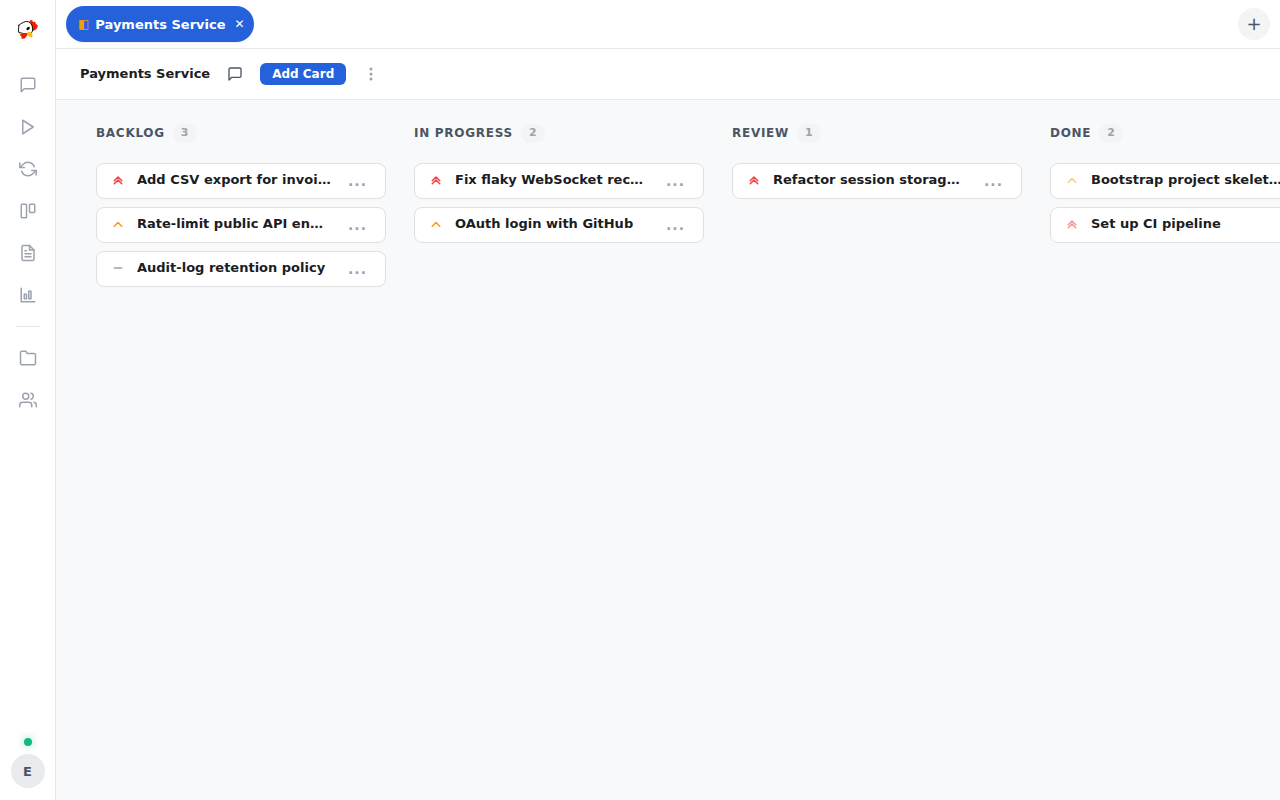
You write the cards. The flock ships them.
Lay out the cards
Write cards the way you'd brief a colleague. Set priorities and dependencies; blocked cards wait until the cards they depend on are done.
A worker swoops in
The orchestrator spawns a worker session — a Claude Code agent — in the project's folder. It consults the project's experts, edits files, and runs your tests.
Review, then Done
Watch every step live, chat with the worker mid-run, inspect a side-by-side diff of what changed, and let the card land in Done.
Everything your flock needs
Chat with any session
Every agent run is a session you can open: the full transcript, each tool call, and the model's replies stream in live. Interrupt, redirect, or just ask what it's doing — workers, experts, and plain chats all speak the same way.
Core concepts →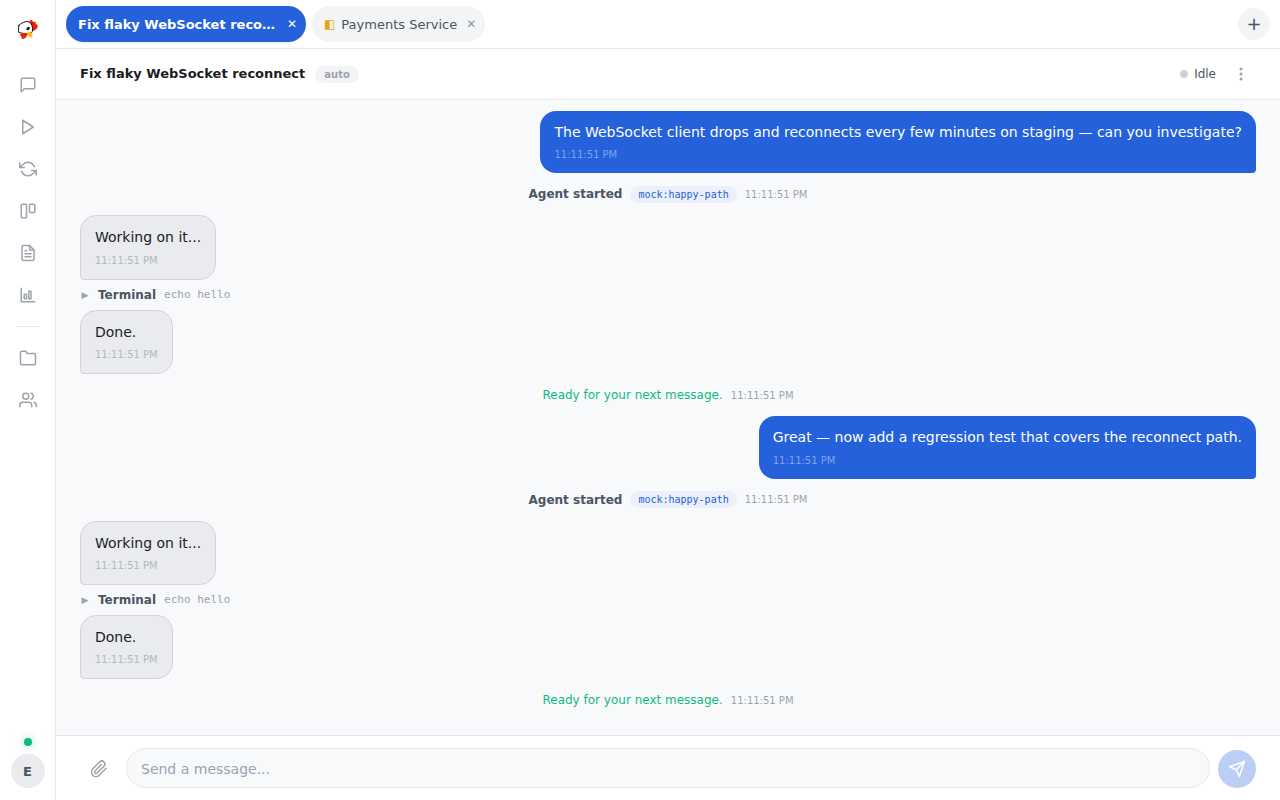
Review documents with an AI pass
Annotate any markdown document — suggest, mark wrong, ask to expand — and run a pass: a reviewer session revises the document, resolves each annotation with a note, and asks an inline question when it needs your call. Every revision is a version with a diff, and nothing touches the source until you apply. Link a GitHub pull request and its review comments come along.
The review flow →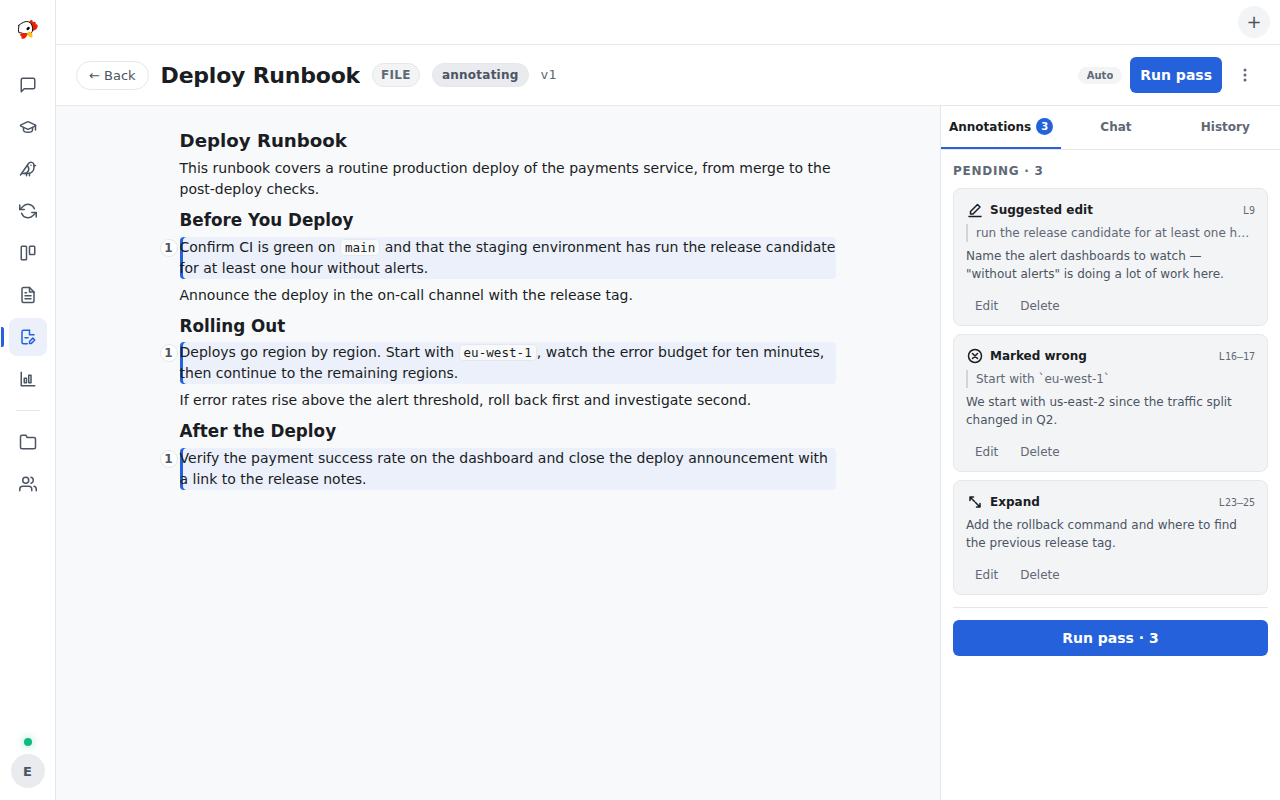
Experts that know every branch
Long-lived expert sessions each read one area of the repository and answer workers' questions; a question expert remembers your answers, and a PM expert records decisions. Workers ask before they guess.
How experts work →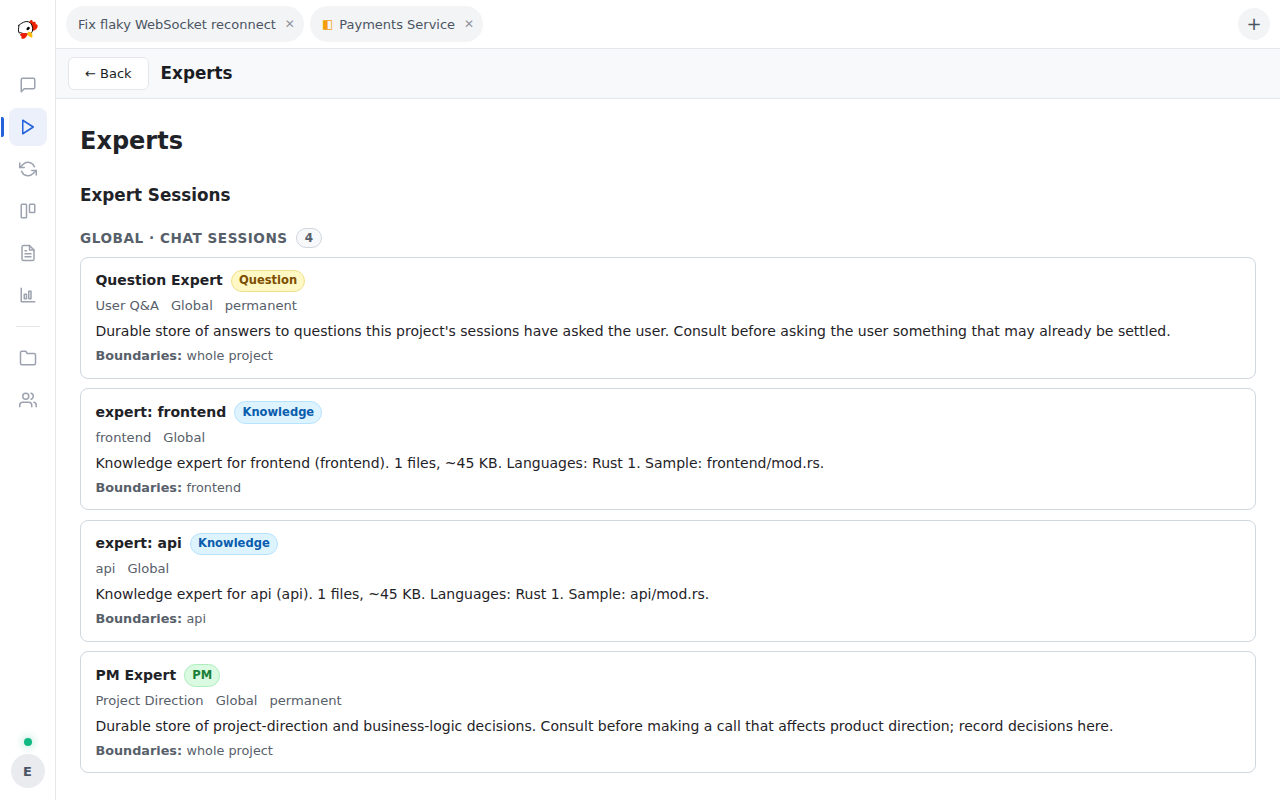
Every provider, with budgets
Run agents on Claude, Grok, Kimi, Cursor, or your own Ollama servers. Sign in multiple accounts per provider, give each a spending budget, and watch real subscription plan usage — every model shows up in one picker.
Models & providers →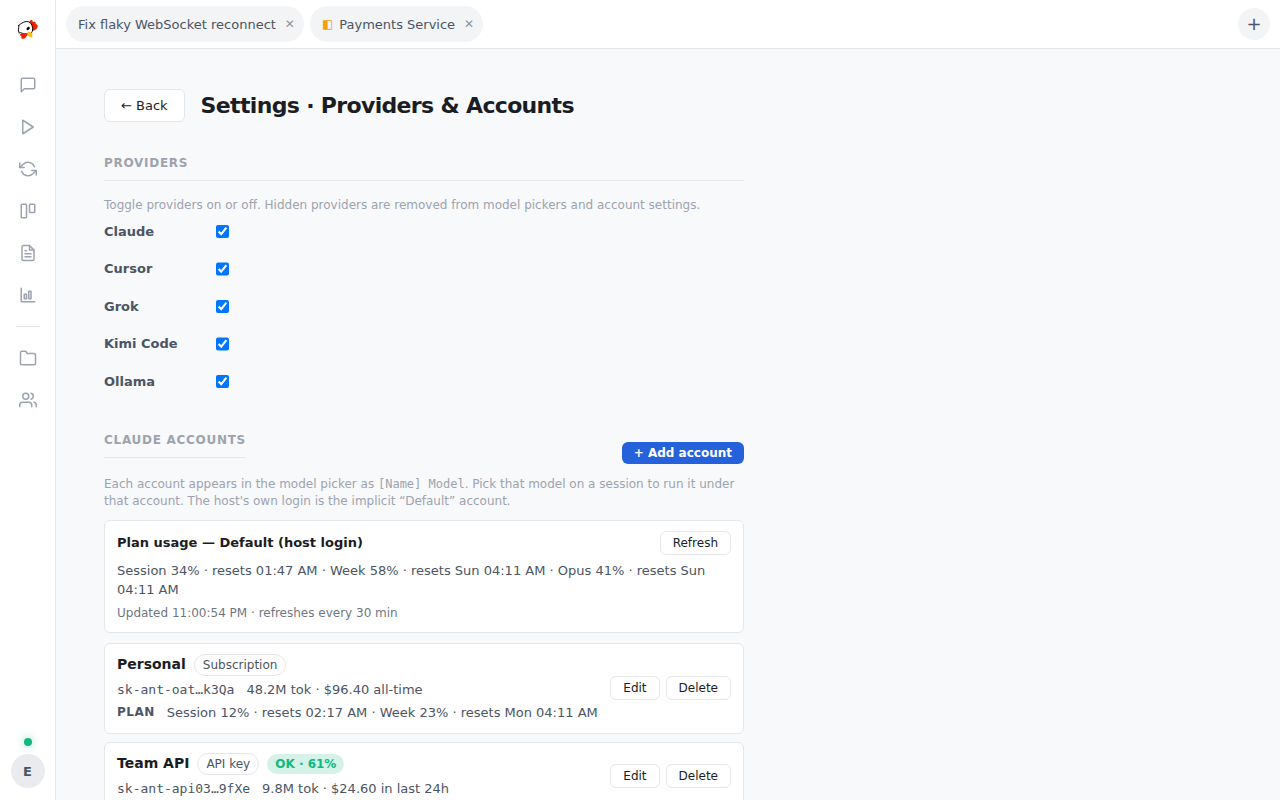
Plugins in two clicks
A built-in registry installs WebAssembly plugins — diff viewer, SSH fleet tools, a public REST API — and MCP server templates. Nothing runs until you approve the exact hooks a plugin asks for; deny and it stays dormant.
Browse the plugins →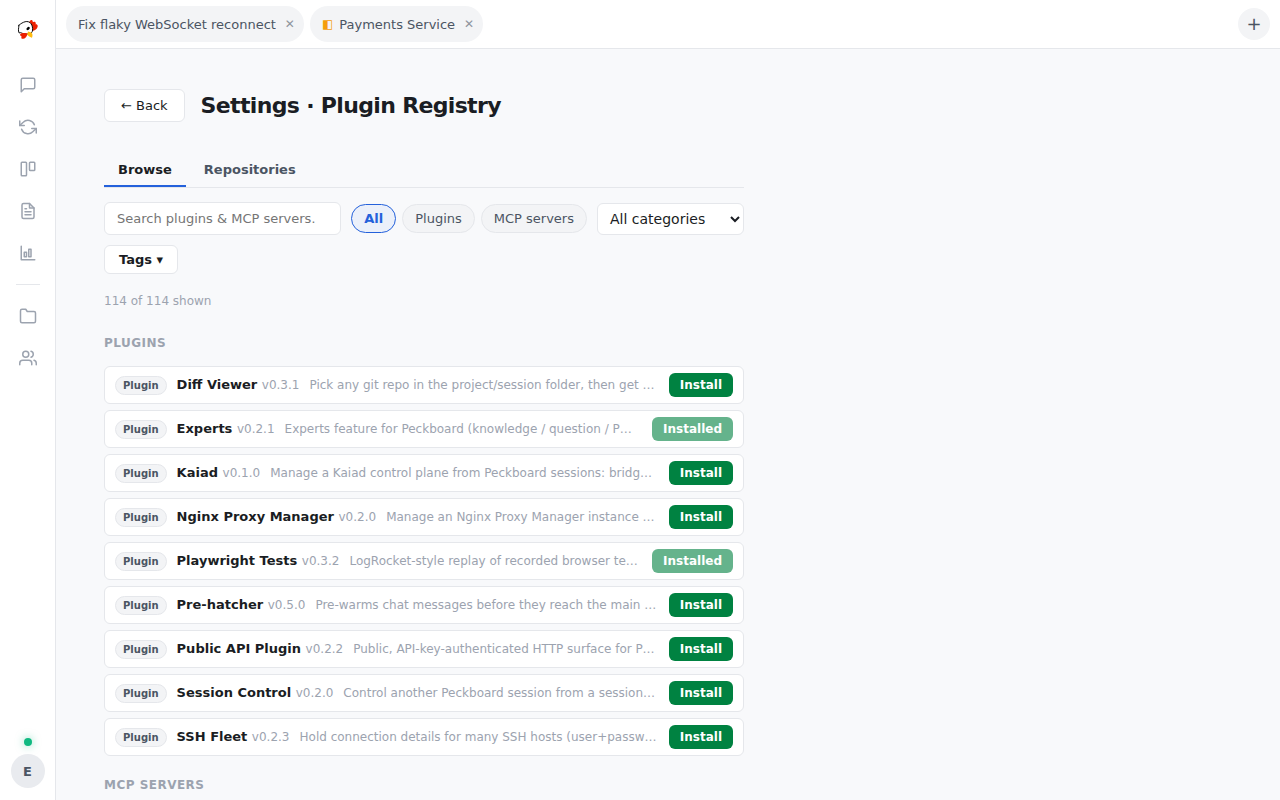
Replay every test flight
Recorded test runs replay like a session-replay product: the cursor moves, clicks ripple, the network waterfall and console scroll alongside, and rage-clicks are called out. Playback skips inactivity so a two-minute run reviews in seconds.
The Playwright Tests plugin →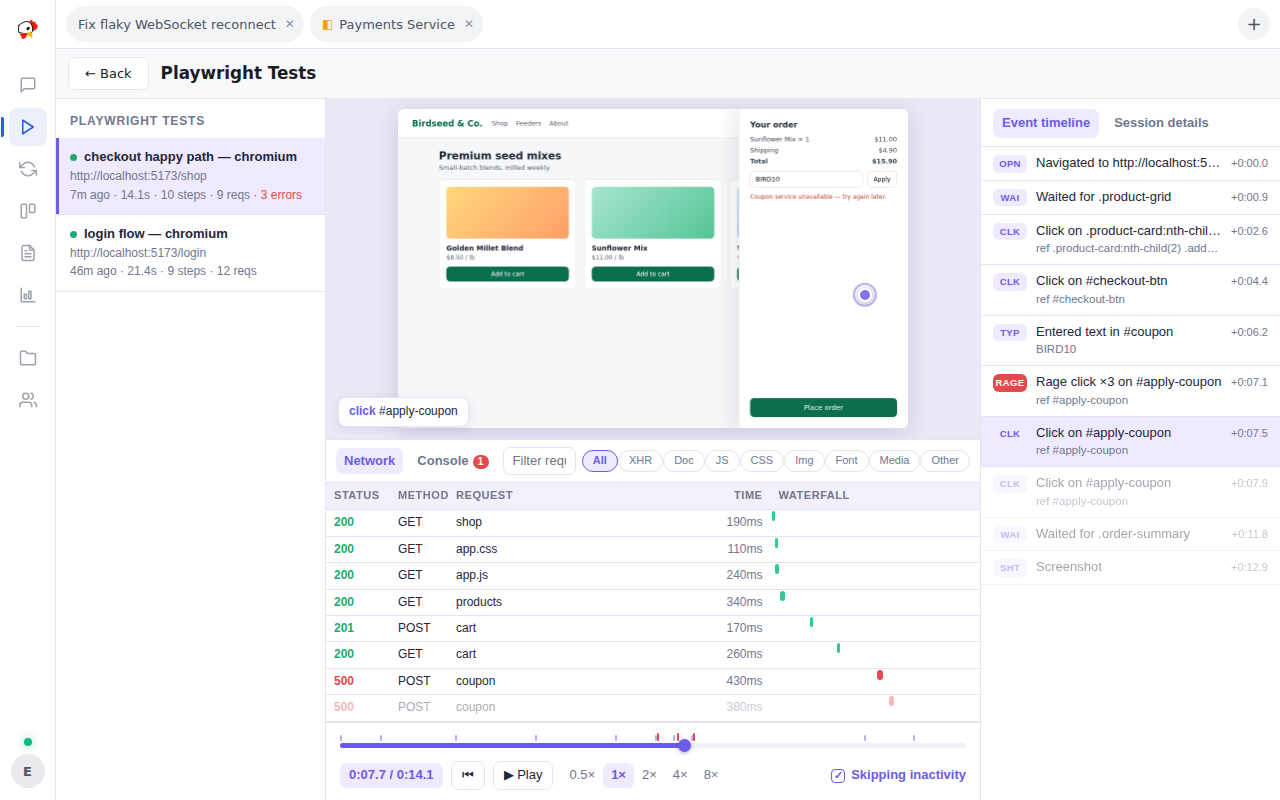
The rest of the flock's kit
Usage dashboard
Token and cost rollups per model, project, and session — with trends over time — so you know where the spend goes before the bill says so.
Repeating tasks
A saved prompt on a schedule: every N minutes, daily, or weekly. Each firing starts a fresh session in the task's folder — nightly dependency checks, morning summaries.
Multi-user access
Accounts with per-user sessions: each person sees and streams their own conversations, and admin-only surfaces stay locked to admins.
Plans before code
An agent proposes a plan you can read, comment on, and revise; a wizard then turns the approved plan into cards the flock works through.
Reports that outlive sessions
Agents write markdown reports — research, audits, findings — that collect in a browsable library long after the session that wrote them is gone.
Every tool call, readable
Whichever provider runs the agent, the transcript reads the same: the real command line, the model's one-sentence reason, and a diff card for every file edit.
One binary. Your machine. Your code.
The web interface, database, and TLS certificates all live inside a single binary. State is a SQLite file in one directory — a backup is a folder copy. No external services, no cloud account, and your source never leaves the machine the agents run on.
Configuration covers the flags, accounts, and where data lives.
# grab a release, then hatch it:
./peckboard
# prints the admin login and listens on :3344